SPAC vs. Traditional IPO
Not too long ago, it seemed as if SPAC deals would dominate the business landscape for the foreseeable future. In 2021 alone, there were more than 600 SPACs registered, and at the time indications were that this would overtake IPOs as the primary method through which companies go public. However, a number of factors have combined since 2021 to take SPAC down a few pegs. Chief among these are higher interest rates, increased regulatory scrutiny, and the generally weaker post-merger performance of many SPACs.
In light of these developments, traditional IPOs have regained their relevance. This is especially true for profitable and late-stage growth companies, and in sectors such as AI, fintech, and healthcare. Nevertheless, neither approach to going public is inherently better, and companies should consider each one in equal measure before making a decision. The method that works best for a particular company will depend a great deal on market conditions, valuation expectations, disclosure readiness, and timelines. It’s important for companies to understand the key differences between SPACs and IPOs, so read on to learn more about how these approaches differ.
How an IPO Works
While every initial public offering is unique, the process typically takes this shape:
- An existing company decides it wants to go public
- The company advertises this by making its case to investors, in what's known as a roadshow
- The company hires underwriters to review its assets and help determine the share price to offer
- Behind the scenes, the company provides the underwriters with records, financial statements and other analyses so the underwriters can set a fair price per share
- The underwriters complete due diligence — a lengthy process
- The company completes necessary paperwork related to the IPO and files with the SEC in the meantime
- The SEC conducts a review that typically lasts three to six months
- On the back end, companies take necessary steps related to the business and administration side of the IPO, such as forming a board of directors and making required financial filings
- Multiple rounds of amendments are often conducted to satisfy regulatory requirements
- A date is set for the IPO
- Shares are offered to the public and the stock price hopefully increases
- The company is now listed publicly
How a SPAC Works
In a nutshell, SPACs take the opposite approach to IPOs. A shell company is formed and taken public; this is the SPAC. The SPAC's purpose is to look for a private company to buy.
Whereas companies looking to go public via IPO must hold elaborate roadshows where they prove their worth to investors before going public, SPACs operate differently. Rather than being convinced to support an IPO, these individuals freely give their money upfront. SPACs tend to attract investors that want the cachet and profits that come with going public, with less upfront risk. Although originally this process was seen as a “fast track” solution, increased regulatory scrutiny now extends the typical timeline for a SPAC transaction.
The SPAC must follow the same rules as other public companies regarding governance, SEC filings and the like. Thus, the SPAC sponsor will have its board of directors, file financial reports and comply with restriction on stock trading. The main difference at this point is purpose: The SPAC only exists to purchase a private company and take it public, whereas private companies exist to fulfill their market-driven purpose.
After going public, the SPAC shareholders then look for suitable targets to acquire. This process can take up to two years. It depends on how selective the public investors are and what requirements they have. When a SPAC finds its match and a deal is brokered, the SPAC "takes over" the privately held company. The SPAC is then dissolved because it had fulfilled its purpose.
Difference in Timelines and Outcomes
Given the number of moving parts in an IPO deal, it generally takes anywhere from six to nine months. If there is a huge demand to go public, underwriters may need to delay scheduled offerings due to the number of IPOs in their queues. SPACs, which have fewer moving parts, tend to take four months or less once a target is identified.
IPOs can be exciting. The lengthy lead-up to the public offering can generate buzz in the market, which can drive up share prices. Yet these deals are also volatile. Even companies that have successful launches often see share prices drop after the IPO. This often happens when the hype around the IPO drives share prices over what the company is worth. IPOs can be moneymakers, but they can also bring significant losses. These are only for investors that will do the due diligence to understand the true market value and the level of risk they face should they choose to buy.
SPACs offset some volatility associated with IPOs by decreasing the price uncertainty associated with share prices. During the SPAC deal negotiation, the two sides will fix a valuation for the business. When shares begin to trade, the price is already set. SPAC investors also retain more liquidity during the deal process. Investors need to formally opt in before the deal can proceed, so they preserve an escape hatch. Given the public market volatility, SPACs have developed a reputation as less risky than IPOs. They are also cheaper: Underwriting and deal completion fees associated with SPACs tend to come in the 5% to 6% range, versus a 7% range for IPOs.
See this chart for some of the critical differences between the IPO, SPAC, and de-SPAC processes:
Path | Typical Timeline | Costs | Risk Factors | Regulatory & Disclosure Requirements |
IPO | 6–12 Months. Subject to market "windows" and lengthy SEC review cycles. | Significant underwriting fees (typically 7%), legal, auditing, and roadshow expenses. | Market Volatility. Price is not set until the night before trading; risk of "broken" deals if markets shift. | Extensive. Full Form S-1 registration, three years of audited financials, and rigorous "quiet period" rules. |
SPAC IPO | 2–3 Months. Much faster as there are no underlying business operations to audit. | Lower initial legal/audit costs; underwriting fees often partially deferred until De-SPAC. | Sponsor Rep. Risk of failing to find a target within the 18–24 month window; investor redemptions. | Streamlined. Form S-1 focused primarily on the management team (Sponsors) and trust account mechanics. |
De-SPAC Merger | 3–12+ Months. Depends on the complexity of the target company’s financial history. | Success fees, PIPE financing costs, and significant "Public Company Readiness" investments. | Redemption Risk. Investors may opt out, leaving the target with less capital than anticipated; high dilution. | Complex. Requires Form S-4 or Proxy Statement; must meet "Super 8-K" requirements within 4 days of closing. |
2026 Market Outlook for SPACs vs IPOs
In the current landscape, SPACs are no longer the hot new thing but still have their place. Traditional IPOs are rebounding in sectors such as AI and technology, biotech, and healthcare. SPACs continue to have relevance but are more selective, complex, and scrutinized. Investors also have increased their scrutiny over matters of governance, financial maturity, and long-term viability.
Companies still may want to choose a SPAC over an IPO is they need more speed to market or access to capital in volatile markets. They also may want to think about a SPAC if they have the involvement of strategic partners.
Get Help Taking a Company Public
Understanding the difference is necessary so you can make the right decision regarding taking a company public. Determining which route to take is only part of the process of going public. These deals are complex. Companies need the right partner that can help them stay organized throughout the deal and due diligence process, file all the paperwork, and reduce overhead and risk associated with the SPAC or IPO process.
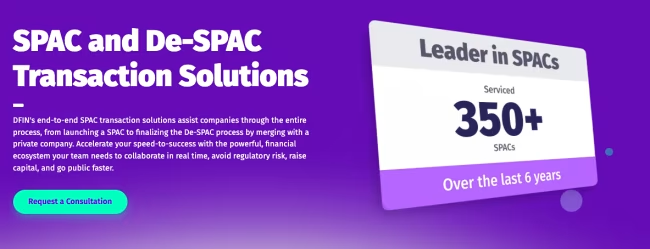
DFIN offers extensive solutions for SPAC and IPO processes. Our end-to-end platform solution provides companies with a dedicated workflow, virtual data room, robust analytics and 24/7 support throughout the process. Major companies rely on DFIN for guidance, competitive advantages, and seamless delivery throughout the SPAC and IPO processes.