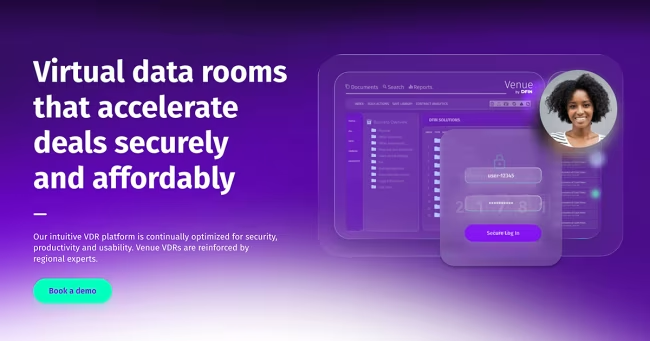
A virtual data room (VDR) is a secure online repository where you store, share, and manage confidential documents during business transactions. Unlike standard file-sharing tools, VDRs offer advanced security features, detailed access controls, and audit capabilities specifically designed for high-stakes deal environments.
 In mergers and acquisitions, the stakes are enormous. You need to share sensitive financial statements, legal contracts, intellectual property records, and employee data with multiple parties. A breach or mishandling of this information can derail deals, trigger regulatory issues, and damage reputations.
The right virtual data room becomes your command center for M&A due diligence. It organizes thousands of documents, controls who sees what, and creates a transparent record of all activity. This matters because buyers and their advisors need confidence that the information they review is accurate, complete, and protected.
How Virtual Data Rooms Support M&A Due Diligence
Due diligence is where deals succeed or fail. Buyers need to examine financial records, contracts, regulatory filings, and operational data before committing capital. Your data room is where this examination happens.
Centralizing Document Management
A well-organized data room eliminates the chaos of scattered files across email threads, shared drives, and physical binders. You upload all relevant documents to a single location with a logical folder structure. Buyers can navigate directly to the information they need.
This centralization accelerates the review process. Instead of requesting documents individually, buyers access everything in one place. Questions get answered faster. Deals move forward on schedule.
Protecting Sensitive Information
M&A transactions involve information that competitors, regulators, and the public should not see prematurely. Customer lists, pricing strategies, pending litigation, and employee compensation data all require protection.
Virtual data rooms encrypt documents both during transfer and at rest. Watermarking identifies the source if documents leak. View-only modes prevent unauthorized downloads. These layers of protection give you control over how information flows during the deal.
Creating Accountability Through Audit Trails
Every action in a quality data room gets logged. You can see which users viewed which documents, how long they spent reviewing materials, and whether they downloaded or printed anything. This visibility serves multiple purposes.
For sellers, audit trails reveal buyer interest levels. Documents that receive heavy attention often signal areas of concern or particular interest. For compliance teams, these records demonstrate proper information handling if questions arise later.
What Security Features Should You Prioritize in a Virtual Data Room?
Security failures during M&A transactions can have catastrophic consequences. Leaked deal terms might alert competitors, or exposed financial data could trigger regulatory investigations. Your VDR selection must prioritize protection.
Encryption Standards
Look for platforms that use AES-256 encryption, the same standard that protects classified government information. This encryption should apply both when data moves between servers (in transit) and when it sits stored (at rest).
Two-factor authentication adds another layer. Even if credentials get compromised, unauthorized users cannot access the data room without a second verification method like a mobile authentication code.
Compliance Certifications
Third-party certifications verify that a platform meets established security standards. SOC 2 Type II certification indicates that auditors have examined the platform's security controls over an extended period and found them effective.
ISO 27001 certification demonstrates adherence to international information security management standards. For deals involving European parties, GDPR compliance ensures proper handling of personal data. These certifications matter because they represent independent verification of security claims.
Granular Access Controls
Different deal participants need different access levels. Your legal team might need full access to contracts. Financial advisors need statements and projections. Potential buyers should only see what the current deal stage allows.
The right data room lets you set permissions at the folder, document, and even page level. You can grant view-only access, allow downloads for specific users, restrict printing, or set time-limited access windows. This granularity protects information while enabling efficient review.
How Do Permission Controls Work in Virtual Data Rooms?
Permission controls determine who can access what and how they can interact with documents. Getting these settings right balances security with usability.
Role-Based Access
Most data rooms let you create user groups with predefined permission sets. You might create groups for legal counsel, financial advisors, executive team members, and potential buyers. Each group receives appropriate access levels automatically when members join.
This approach scales efficiently. When new advisors join the deal team, you assign them to the relevant group rather than configuring individual permissions. Changes to group settings apply immediately to all members.
Document-Level Restrictions
Some documents require tighter controls than others. Employee personal information, pending litigation details, and competitive intelligence often need restricted access even among authorized deal participants.
Advanced data rooms let you apply restrictions at the document level. You can make a document visible to executives but invisible to junior analysts. You can allow one buyer group to download a document while limiting another to view-only access.
Dynamic Watermarking
Watermarks identify the source when documents circulate outside approved channels. Dynamic watermarks include user-specific information like name, email address, and access timestamp directly on each viewed page.
This feature discourages unauthorized sharing. Users know that any leaked document can be traced back to their account. If a leak occurs, you can identify the source and take appropriate action.
What Makes a Virtual Data Room User-Friendly for M&A Teams?
Security features mean nothing if your team cannot use the platform effectively. M&A transactions often involve dozens of participants with varying technical skills. Your data room must accommodate everyone.
Intuitive Navigation
Deal participants should find documents without training sessions. Clear folder structures, search functionality, and logical naming conventions reduce time spent hunting for information.
Look for platforms that support bulk uploads with drag-and-drop functionality. When you need to add hundreds of documents quickly, the upload process should not become a bottleneck.
Q&A Management
Due diligence generates questions. Buyers identify issues, request clarification, and need additional documentation. A built-in Q&A feature streamlines this communication.
Effective Q&A tools route questions to the right team members, track response times, and maintain a searchable archive. This prevents important questions from getting lost in email threads and ensures consistent responses across buyer groups.
Mobile Access
Deal teams work around the clock and around the world. Mobile applications let participants review documents, respond to questions, and monitor activity from anywhere.
Mobile access should maintain security standards. The same encryption, authentication, and permission controls that protect desktop access must apply to mobile sessions.
How Do You Evaluate Virtual Data Room Providers for M&A Transactions?
Choosing a VDR provider requires systematic evaluation across multiple dimensions. Price matters, but it should not dominate the decision when sensitive deal information is at stake.
Security Infrastructure Assessment
Start with security credentials. Request documentation of certifications, encryption protocols, and data center locations. Ask about incident response procedures and historical security performance.
Physical security matters for data centers. Look for facilities with redundant power, climate control, fire suppression, and restricted physical access. Geographic diversity in data centers protects against regional outages.
Feature Evaluation Against Deal Requirements
Map your specific deal needs against each platform's capabilities. A straightforward asset sale has different requirements than a complex cross-border merger with regulatory filings across multiple jurisdictions.
Consider document volume expectations, number of users, duration of access needs, and reporting requirements. Some platforms charge based on storage, others on users, and some on a flat project basis.
Provider Experience and Support
M&A transactions do not pause for technical difficulties. Your VDR provider should offer responsive support during the hours when your deal team works, which often means around-the-clock availability.
Ask about the provider's experience with transactions similar to yours. A provider experienced in healthcare M&A understands HIPAA requirements. A provider focused on financial services knows regulatory expectations for those deals.
What Role Does Compliance Play in Virtual Data Room Selection?
Compliance requirements vary by industry, geography, and deal structure. Your data room must satisfy the most stringent requirements that apply to your transaction.
Regulatory Considerations
Financial services transactions involve SEC regulations, banking authority requirements, and often international financial regulatory bodies. Healthcare deals must address HIPAA and potentially state-specific privacy laws. Technology transactions may implicate export control regulations.
DFIN brings decades of regulatory expertise to M&A support, helping deal teams navigate the compliance requirements that apply to their specific transactions. This experience matters when preparing for regulatory review.
Industry-Specific Requirements
Some industries impose additional data handling requirements beyond general regulations. Defense contractors must meet ITAR standards. Government contractors need platforms authorized under FedRAMP. International deals may require data residency guarantees.
Your VDR provider should understand these requirements and demonstrate compliance. Generic assurances are not sufficient when regulatory violations carry significant penalties.
Documentation and Audit Readiness
Post-transaction, you may need to demonstrate how information was handled during the deal. Regulatory inquiries, litigation, or internal reviews might require detailed records of document access and sharing.
Your data room should maintain comprehensive logs that remain accessible after the deal closes. Ask about data retention policies and the process for obtaining historical records if needed later.
How Do You Structure a Virtual Data Room for M&A Due Diligence?
Ensuring documents are properly organized determines how efficiently buyers can complete their review. A poorly structured data room frustrates buyers, delays timelines, and creates a negative impression of your operational capabilities.
Standard Folder Hierarchies
Most M&A data rooms follow established organizational patterns. Top-level folders typically include corporate documents, financial information, legal matters, operational data, human resources, intellectual property, and regulatory filings.
Sub-folders break these categories into specific document types. Under financials, you might have audited statements, management accounts, projections, tax returns, and debt agreements. Consistent structure helps buyers locate information quickly.
Index and Document Numbering
A master index lists every document in the data room with unique reference numbers. When questions reference specific documents, everyone knows exactly which file the question addresses.
Consistent numbering conventions prevent confusion. Documents added later should follow the established pattern. Version control becomes critical when documents get updated during the deal process.
Staged Disclosure
Not all information should be available from day one. Highly sensitive materials like customer contracts with pricing details or employment agreements with compensation information might only become accessible after preliminary terms are agreed.
Your data room structure should accommodate staged disclosure. You can prepare folders with restricted access that open to additional users as the deal progresses through defined milestones.
What Are Common Mistakes to Avoid When Selecting a Virtual Data Room?
Organizations new to M&A transactions often make preventable errors when choosing and configuring their data rooms. Learning from others' mistakes saves time and protects deals.
Prioritizing Price Over Security
Budget constraints are real, but the cheapest option rarely represents the right choice for sensitive transactions. A data breach during M&A can destroy deal value, trigger litigation, and damage relationships with buyers.
Evaluate total cost of ownership, including the potential cost of security failures. Platform features that accelerate due diligence or reduce administrative burden often justify higher direct costs.
Ignoring User Experience
Technically sophisticated platforms mean nothing if your team cannot use them effectively. Complicated interfaces increase training requirements, slow document uploads, and frustrate deal participants.
Request demonstrations with realistic scenarios before committing. Have actual team members test the platform, not just IT staff evaluating technical specifications.
Underestimating Support Needs
M&A timelines are unpredictable. Critical issues arise on weekends, holidays, and late nights. Limited support hours create risk when technical problems threaten deal milestones.
Confirm support availability and response time commitments in writing. Understand escalation procedures for urgent issues. Test support responsiveness before the deal enters critical phases.
How Does DFIN Support M&A Deal Management and Due Diligence?
DFIN brings a distinct approach to M&A support, combining technology solutions with deep expertise in regulatory compliance and corporate transactions.
Integrated Deal Solutions
DFIN Venue virtual data room connects secure document management with the broader transaction support that complex deals require. Rather than operating as a standalone file storage system, Venue integrates with the regulatory filing and compliance workflows that DFIN has refined over decades.
This integration matters because M&A transactions rarely exist in isolation from regulatory requirements. SEC filings, proxy materials, and corporate disclosures often accompany deals. Having these capabilities connected reduces coordination complexity.
Regulatory Expertise as a Foundation
As the leading SEC filing agent for public companies and investment companies, DFIN understands the regulatory environment surrounding corporate transactions. This expertise informs how deal solutions are designed and supported.
When your transaction involves regulatory filings, having a provider who understands both the data room requirements and the filing requirements eliminate gaps between deal execution and compliance obligations.
Security Built on Compliance Standards
DFIN's approach to security reflects the standards required for SEC filings and sensitive corporate information. The same protections that safeguard regulatory submissions apply to deal documents.
This compliance-centered security perspective addresses requirements that generic data room providers might not anticipate. Financial services transactions, public company deals, and regulated industry M&A benefit from this specialized understanding.
What Questions Should You Ask Virtual Data Room Providers?
Before committing to a provider, gather information that reveals true capabilities beyond marketing claims. These questions help distinguish platforms that meet your needs from those that fall short.
Security and Compliance Questions
Ask for current certification documentation, not just claims of compliance. Request details about encryption methods, key management practices, and data center security measures. Inquire about security incident history and response procedures.
Understand where your data will physically reside. For international deals, data residency requirements may restrict storage locations. Confirm that the provider can meet your geographic requirements.
Operational Questions
Determine support availability and average response times. Ask about dedicated account management for enterprise deals. Understand the process for adding users, adjusting permissions, and handling urgent requests.
Clarify data retention policies after the deal closes. Some transactions require long-term archive access for regulatory or litigation purposes. Confirm that your historical data remains accessible when needed.
Technical Questions
Evaluate integration capabilities with your existing systems. API access may be important if you need to connect the data room with other deal management tools. Understand import and export options for document migration.
Test actual performance with realistic document volumes. Upload speed, search responsiveness, and concurrent user capacity all affect daily operations during intensive due diligence periods.
How Do You Prepare Your Organization for Virtual Data Room Implementation?
Successful data room deployment requires internal preparation beyond platform selection. Organizational readiness determines how smoothly the transition proceeds.
Document Inventory and Organization
Before uploading anything, inventory the documents your deal will require. Identify gaps that need to be filled and outdated materials that need updating. Create a complete list organized by category.
Establish naming conventions before the first upload. Consistent file names with dates, version numbers, and clear descriptions make documents findable. Inconsistent naming creates confusion that compounds as document volume grows.
Team Training and Role Assignment
Identify who will administer the data room, who will upload documents, and who will respond to buyer questions. Clear role definitions prevent duplication and ensure coverage.
Schedule training sessions before the deal launches. Even intuitive platforms require familiarization. Users should know how to perform their specific tasks before time pressure mounts.
Process Documentation
Document procedures for common tasks: adding new users, updating documents, responding to questions, and escalating issues. Written procedures ensure consistency when multiple team members handle similar tasks.
Establish review and approval workflows for sensitive requests. Permission changes or document additions affecting restricted areas should require appropriate authorization before implementation.
What Trends Are Shaping Virtual Data Rooms for M&A in 2026?
The VDR landscape continues evolving as technology advances and transaction complexity increases. Understanding emerging trends helps you select platforms positioned for the future.
AI-Powered Document Analysis
Artificial intelligence is transforming how deal teams work with large document sets. AI tools can analyze contracts for key terms, identify potential issues, and extract data for comparison across multiple agreements.
Enhanced Collaboration Features
Modern data rooms increasingly support real-time collaboration beyond basic document sharing. Annotation tools, integrated video conferencing, and co-editing capabilities reduce the need to switch between platforms.
These features matter particularly for cross-border deals where time zones limit synchronous communication. Asynchronous collaboration tools help geographically dispersed teams maintain momentum.
Deeper Integration Ecosystems
Standalone data rooms are giving way to integrated deal platforms that connect document management with project management, communication tools, and post-merger integration planning.
API-first architectures enable connections with specialized tools for specific deal aspects. This flexibility lets organizations build deal tech stacks tailored to their transaction patterns.
In Conclusion: Selecting the Right Virtual Data Room for Your M&A Transaction
Your virtual data room choice shapes the entire due diligence experience for everyone involved in the transaction. Security protects sensitive information from unauthorized access. Usability enables efficient document review. Compliance capabilities satisfy regulatory requirements.
Start by defining your specific requirements based on deal complexity, regulatory environment, and participant needs. Evaluate providers against these requirements rather than generic feature lists. Test platforms with realistic scenarios involving actual team members.
Consider the broader context of your transaction. If regulatory filings accompany your deal, providers like DFIN who understand both data room requirements and filing requirements offer integrated support that standalone platforms cannot match.
The right data room becomes invisible during the deal—participants focus on reviewing documents and making decisions rather than fighting with technology. That invisibility represents success: secure, efficient, and effective support for the transaction that matters to your organization.
Key Takeaway: How to Choose a Virtual Data Room for M&A in 2026
Choosing the right virtual data room is critical to maintaining deal momentum, protecting sensitive information, and fostering buyer confidence throughout the M&A process. Leading solutions combine enterprise-grade security, granular access controls, comprehensive audit trails, and expert support to help organizations manage due diligence efficiently while maintaining visibility into document activity and ensuring regulatory compliance.
FAQs About How to Choose a Virtual Data Room for M&A in 2026
What is the primary purpose of a virtual data room in M&A transactions?
A virtual data room creates a secure central location for storing and sharing confidential documents during M&A due diligence. It enables controlled access to sensitive information while maintaining detailed records of all activity for compliance and security purposes.
How does DFIN's approach to virtual data rooms differ from standard providers?
DFIN combines secure document management with deep regulatory expertise gained from decades as the leading SEC filing agent. This integration connects your data room with broader compliance and filing capabilities, supporting deals where regulatory requirements accompany the transaction.
What security certifications should a virtual data room have for M&A?
Look for SOC 2 Type II certification, which verifies security controls through extended auditor examination. ISO 27001 certification demonstrates international information security standards compliance. GDPR compliance matters for deals involving European data subjects.
How do permission controls protect sensitive deal information?
Permission controls let you restrict document access by user role, folder, or individual file. DFIN Venue offers granular settings that control viewing, downloading, and printing rights. You can create user groups with predefined access levels for efficient management.
What features make a virtual data room user-friendly for deal teams?
Intuitive navigation, bulk upload capabilities, robust search functionality, and built-in Q&A management reduce friction during due diligence. Mobile access with maintained security enables team members to work from anywhere during time-sensitive transaction phases.
How should you structure documents in a virtual data room for M&A?
Organize documents using standard categories: corporate records, financials, legal matters, operations, HR, intellectual property, and regulatory filings. Create a master index with unique document numbers. DFIN's experience with thousands of transactions informs organizational approaches that accelerate buyer review.
What questions should you ask VDR providers before selecting one?
Request current security certifications and incident history documentation. Confirm data residency locations and retention policies. Understand support availability and response commitments. Test actual platform performance with realistic document volumes before committing.
How do AI capabilities enhance virtual data room functionality?
AI capabilities can enhance virtual data room functionality by automating document organization, analysis, and workflows while providing deeper insights into transaction activity. AI-powered VDRs can offer advanced capabilities such as automatically categorizing and indexing documents, redacting sensitive information, generating document summaries, enabling natural-language search, identifying key contract terms and potential risks, accelerating due diligence, detecting unusual user activity, and providing engagement analytics that reveal which documents are receiving the most attention. By automating these traditionally manual processes, organizations can improve efficiency, enhance accuracy, strengthen security and compliance, and make faster, more informed decisions throughout M&A transactions, capital raises, audits, and other strategic initiatives.