Healthcare organizations operate in one of the most complex and highly regulated environments in the global economy. Transactions in this sector often involve vast amounts of sensitive information, multiple stakeholders, and strict compliance requirements. As a result, the need for secure, structured, and efficient data management has never been greater.
Healthcare virtual data rooms provide a specialized solution designed to support these demands. These platforms enable organizations to manage confidential documents, streamline collaboration, and maintain regulatory compliance throughout the transaction lifecycle.
What is a Healthcare Data Room?
A healthcare data room is a secure digital environment used to store, manage, and share sensitive documents during transactions. While the concept is rooted in traditional deal-making processes, today’s virtual data room solutions have evolved to meet the specific needs of healthcare providers, pharmaceutical companies, and the broader life science ecosystem.
These environments are used across a wide range of scenarios, including mergers and acquisitions, fundraising initiatives, and regulatory compliance activities. Unlike general-purpose file sharing tools, healthcare data rooms are designed to handle highly sensitive data while maintaining strict access control and visibility over document usage.
Healthcare transactions are inherently complex. They often involve multiple parties such as investors, legal teams, regulators, and operational leaders. Each stakeholder requires access to different levels of confidential information, making structured document sharing essential.
In this context, healthcare virtual data rooms serve as the central hub for managing transaction-critical materials. They provide a secure foundation for collaboration while ensuring that sensitive documents remain protected at every stage.
Healthcare Data Room Components & Use Cases
Healthcare data rooms differ from standard platforms due to the nature of the information they manage and the regulatory environment in which they operate. These platforms are designed with enhanced capabilities that address both security and compliance challenges.
Key characteristics include advanced encryption protocols that protect sensitive data both in transit and at rest. Granular access control settings allow administrators to define exactly who can view, edit, or download specific documents. This level of precision is essential when dealing with confidential information that must be restricted to select stakeholders.
Healthcare data rooms also support detailed audit trail functionality, which tracks user activity across the platform. This provides visibility into who accessed documents, when they were accessed, and how they were used. This level of tracking is critical for both compliance and internal governance.
Common use cases include:
- Mergers and acquisitions involving healthcare systems or biotech firms
- Clinical trial data sharing between research partners
- Licensing agreements for drug development or intellectual property
Each of these scenarios requires secure document sharing, strict oversight, and the ability to manage large volumes of sensitive documents efficiently.
Why Healthcare Transactions Require Specialized Data Rooms
Standard data room solutions often fall short in healthcare environments due to the unique regulatory and operational demands of the industry. Healthcare transactions may need to comply with a range of regulations, including HIPAA in the United States, FDA requirements for drug and device approvals, and international frameworks such as GDPR.
These requirements introduce additional layers of complexity that generic platforms are not designed to handle. Healthcare data rooms must support regulatory compliance while maintaining high levels of data security across all interactions.
The types of data involved also increase the stakes. Healthcare transactions frequently include patient data, clinical trials results, proprietary research, and intellectual property. Each of these categories represents highly sensitive information that must be protected against unauthorized access.
In addition, healthcare deals are often high-value transactions involving private equity firms, strategic buyers, and institutional investors. These deals are typically conducted under tight timelines, requiring efficient workflows and real-time access to critical materials.
Without a specialized data room, organizations risk delays, compliance issues, and potential exposure of confidential information.
Key Features of Healthcare Data Rooms
To support the demands of healthcare transactions, data rooms must offer a robust set of capabilities that go beyond basic file storage.
Security and Compliance
Security is the foundation of any healthcare data room. Platforms must include advanced encryption, multi-factor authentication, and comprehensive audit trail tracking. These features that help ensure sensitive data is protected and that all activity is fully documented.
Permission-Based Access
Granular access control allows organizations to assign permissions based on user roles. For example, legal teams may require full access to documents, while investors may only need visibility into specific financial or operational data.
Document Organization
Structured folder systems enable efficient document management during due diligence. Clear organization helps stakeholders quickly locate relevant materials and reduces confusion during complex transactions.
Real-Time Collaboration
Modern platforms support secure document sharing and collaboration across distributed teams. This enables stakeholders to review, comment on, and analyze documents while maintaining security controls.
Auditability
Comprehensive tracking of user activity ensures that all actions within the data room are recorded. This level of transparency supports compliance and provides a clear record of document access and usage.
Types of Healthcare Transactions Supported
Healthcare virtual data rooms are used across a wide range of transaction types, each with unique requirements and challenges.
Mergers and Acquisitions
Healthcare organizations frequently engage in M&A deals involving hospitals, clinics, and biotech companies. These transactions require extensive due diligence and secure document sharing across multiple parties.
Private Equity Investments
Private equity firms play a significant role in healthcare, investing in provider networks, digital health platforms, and life science innovations. Data rooms enable secure collaboration between investors and target organizations.
Licensing and Partnerships
Drug development and research partnerships often involve the exchange of proprietary data. Data rooms ensure that intellectual property and sensitive documents are protected throughout the process.
Clinical Trial Collaborations
Collaborative research efforts require secure sharing of clinical trials data, protocols, and results. Data rooms provide a controlled environment for managing these exchanges.
These transaction types fall under the broader category of corporate transactions, where secure information exchange is essential for successful outcomes.
Data Types Managed in Healthcare Data Rooms
Healthcare data rooms must support a wide variety of data types, each with its own sensitivity, regulatory implications, and business importance. Because healthcare transactions often involve both operational and clinical considerations, the scope of information shared is broader and more complex than in many other industries. This makes it essential for platforms to manage data securely while ensuring accessibility for authorized stakeholders.
Clinical Data
Clinical data is among the most sensitive and highly regulated information stored in a data room. This includes trial results, study protocols, patient outcomes, and investigator reports generated during clinical trials. These materials are critical for evaluating the safety, efficacy, and commercial potential of new therapies or medical devices.
Because this data may contain protected health information or proprietary research findings, it must be handled with strict controls. Secure storage, restricted access, and detailed tracking of document activity are essential to ensure compliance and protect patient privacy.
Regulatory Documents
Regulatory documentation forms the backbone of compliance in healthcare transactions. This category includes FDA submissions, correspondence with regulatory bodies, audit reports, and documentation supporting approvals or certifications.
These documents provide insight into a company’s compliance history and readiness for future regulatory review. During due diligence, buyers and investors rely heavily on this information to assess risk. As a result, maintaining organized, accurate, and easily accessible regulatory records is critical for a smooth transaction process.
Financial Information
Financial data plays a central role in evaluating transaction value and long-term viability. This includes revenue performance, financial projections, reimbursement models, cost structures, and profitability analyses.
In healthcare, financial information is often closely tied to operational and clinical outcomes, making it more complex than standard financial reporting. Data rooms must support secure sharing of this information while ensuring that only authorized stakeholders can access sensitive financial details.
Intellectual Property
Intellectual property is often one of the most valuable assets in healthcare and life sciences transactions. This includes patents, proprietary research, drug formulations, algorithms, and other innovations that differentiate an organization in the market.
Because of its strategic importance, intellectual property must be carefully protected throughout the transaction process. Data rooms provide controlled environments where these assets can be shared securely, ensuring that confidentiality is maintained while still enabling thorough evaluation by potential partners or investors.
Operational Data
Operational data provides insight into how a healthcare organization functions on a day-to-day basis. This includes staffing models, organizational structures, facility information, supply chain processes, and IT systems.
For buyers or investors, this information is essential for understanding scalability, efficiency, and potential integration challenges. Well-organized operational data helps stakeholders assess how the organization will perform post-transaction and identify opportunities for improvement or synergy.
Regulatory Considerations for Healthcare Data Rooms
Compliance is a central requirement for any healthcare data room. Organizations must ensure that all document sharing activities align with applicable regulations.
HIPAA Compliance
Protecting patient health information is a top priority. Data rooms should include safeguards that support compliance to prevent unauthorized access and ensure secure handling of sensitive data.
FDA Requirements
Healthcare organizations must maintain detailed documentation to support drug and device approvals. Data rooms facilitate organized storage and retrieval of these materials.
Global Regulations
International transactions may require compliance with GDPR and other regional data protection laws. This adds complexity to cross-border document sharing.
Audit Readiness
Maintaining a complete audit trail is essential for demonstrating compliance during regulatory reviews. Data rooms provide visibility into all user activity, supporting transparency and accountability.
Benefits of Healthcare Data Rooms
Healthcare data rooms offer significant advantages that enhance both operational efficiency and transaction outcomes. By combining secure infrastructure with structured workflows, these platforms help organizations manage complexity while maintaining control over sensitive information.
The benefits of a virtual data room include:
Enhanced Data Security
Advanced security features protect sensitive information and reduce the risk of breaches. Encryption, multi-factor authentication, and detailed audit trails ensure that confidential information remains protected throughout the transaction lifecycle.
Faster Due Diligence
Centralized document access accelerates review processes and reduces delays. Stakeholders can quickly locate and analyze relevant materials, which helps keep transactions on schedule and minimizes bottlenecks.
Improved Collaboration
Stakeholders can securely share and review documents in real time, improving communication and decision-making. This enables cross-functional teams, advisors, and investors to stay aligned without compromising data security.
Reduced Regulatory Risk
Built-in compliance features help organizations meet regulatory requirements and avoid penalties. Consistent documentation, access tracking, and version control support audit readiness and regulatory transparency.
Streamlined Execution
Efficient workflows enable faster transaction completion and better overall outcomes. By reducing manual processes and improving coordination, organizations can move from due diligence to closing with greater speed and confidence.
Best Practices for Healthcare Data Room Setup
Proper setup is critical to maximizing the effectiveness of a healthcare data room. Organizations should follow structured best practices to ensure success.
Key steps include:
- Organizing documents by transaction phase to improve navigation
- Applying strict access control policies to protect confidential information
- Ensuring data accuracy and completeness before sharing
- Standardizing naming conventions for consistency
- Conducting regular audits of data room activity
These practices help create a reliable and efficient environment for managing sensitive documents.
How Technology Supports Healthcare Transactions
Advances in technology are transforming how healthcare transactions are executed. Modern data room platforms incorporate features that enhance both speed and accuracy.
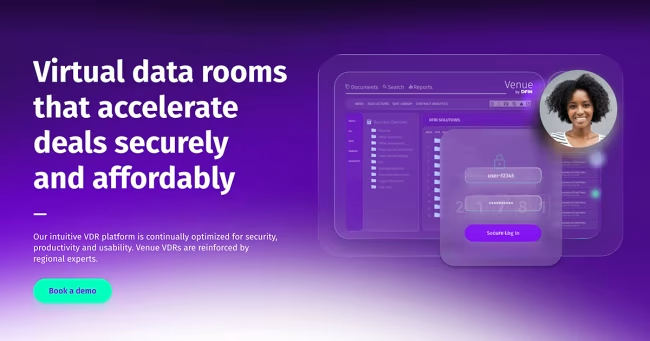
Platforms such as DFIN Venue® provide secure document sharing, compliance-ready workflows, and efficient due diligence capabilities. As a leading virtual data room provider, DFIN helps organizations manage complex transactions with confidence.
The Future of Healthcare Data Rooms
Healthcare data rooms continue to evolve as technology and regulatory expectations advance. Emerging trends include increased use of AI in due diligence, stronger global compliance requirements, and deeper integration with clinical and operational systems.
Organizations are also placing greater emphasis on transparency, ensuring that stakeholders have access to accurate and timely information. As these trends continue, healthcare data rooms will play an even more critical role in enabling secure and efficient transactions.
Execute Your Healthcare Deal with Confidence and Security
Healthcare transactions demand a high level of precision, security, and compliance. From managing sensitive data to coordinating complex stakeholder groups, organizations must navigate a challenging environment where errors can have significant consequences.
Healthcare virtual data rooms provide the infrastructure needed to support these demands. By enabling secure document sharing, maintaining strict access control, and supporting regulatory compliance, these platforms help organizations execute transactions more effectively.
Companies that invest in the right tools gain a competitive advantage through improved efficiency, reduced risk, and enhanced stakeholder confidence. With the support of advanced solutions like DFIN Venue®, organizations can approach healthcare transactions with greater clarity and control.
In an industry where trust and accuracy are paramount, the right data room is not just a tool. It is a strategic asset that supports long-term success.