As we begin 2026, capital markets are reopening, but they are doing so selectively. IPO and M&A activity is returning, not in broad waves, but through narrower execution windows. Companies with predictable revenue models, disciplined cost structures, and credible governance frameworks are well positioned in this environment. Simply put, the companies that win are the ones that have already invested in ongoing compliance readiness as well as transaction readiness.
That backdrop is shaping both our outlook for 2026 and the way we are evolving DFIN. As we shared on our recent earnings call, we are entering the year with momentum, growing by over 10% in the fourth quarter, expanding margins, and continuing to shift our business toward higher-value, more predictable software revenue. Just as important, we are doing so with modern software platforms purpose-built to sit at the nexus of regulatory compliance and to deliver confidence to our clients as they navigate regulatory change and complexity. Regulatory obligations do not pause when markets do.
When we say we have the most modern virtual data room in Venue and the newest financial reporting software with ActiveDisclosure, what we also mean is this: DFIN is the disruptor. These platforms were rebuilt from the ground up on modern architecture, designed for today’s capital markets, not yesterday’s workflows and legacy constraints. The strength of our software, backed by our industry-leading regulatory expertise, will propel us forward into the next chapter of our transformation journey.
Software transformation underscored by strong results
Our performance in 2025 reflects years of focused investment and execution discipline as we transformed DFIN into a software-led company. For the full year, we delivered record software solutions revenue of $358 million, growing nearly 9% year over year, with software now representing approximately 47% of total revenue. That mix shift is structural, not cyclical, and it reflects the durability of regulatory compliance demand across market cycles.
At the same time, we sustained leadership in transactions, delivering strong event-driven revenue growth in the fourth quarter while maintaining high market share in large, high-quality IPO and M&A deals. This mix is important as clients want platforms and processes that support both recurring compliance and complex transactions without forcing tradeoffs.
ActiveDisclosure: built for modern disclosure demands
ActiveDisclosure provides a clear example of what our disruption looks like in practice. Full-year growth of 17% marked the strongest performance since 2021, supported by growth in client count, higher value per client, and continued migration of workflows from services into the platform.
We are also seeing ActiveDisclosure play a larger role in IPO execution, with increased usage for drafting and filing S-1s. That convergence of compliance and transactions is intentional. It reduces friction, improves consistency, and helps issuers and their advisors move faster without sacrificing accuracy or control – all while continuing to leverage the regulatory expertise and service model that are part of DFIN’s DNA.
Venue: enabling confidence for high-stakes transactions
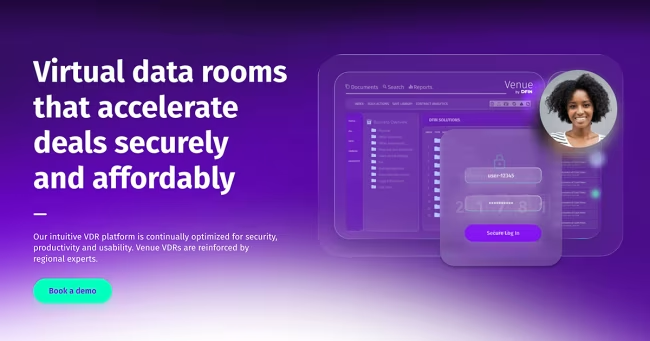
Venue’s evolution reflects similar dynamics. While 2025 was a transition year for the M&A markets, momentum improved sequentially throughout the year, and we exited the fourth quarter with strong growth. The launch of new Venue Virtual Data Rooms in September 2025 marked a fundamental shift, not an incremental upgrade.
Modern M&A and IPO processes demand secure collaboration across geographies, compressed timelines, and increasing regulatory scrutiny. New Venue was designed for that reality. It supports faster execution, stronger controls, and greater transparency across deal teams and stakeholders. Client feedback has been overwhelmingly positive.
As M&A activity continues to recover in 2026, we expect this platform modernization to translate into increased adoption and growth.
Transactions and software, working together
One of the defining features of our model is how revenue from event-driven IPO and M&A transactions complements software revenue from recurring regulatory and compliance reporting. In the fourth quarter, transactional revenue grew nearly 30% year over year, reflecting improving market activity and our continued market share leadership.
At the same time, recurring and reoccurring revenue now represents close to 80% of our total revenue. That balance allows us to benefit from transaction recoveries without being dependent on them, while also embedding transactions more deeply into our software ecosystem.
Looking ahead to 2026
IPO activity is returning, but valuation realism has become a baseline expectation. Companies are investing earlier and more heavily in governance, internal controls, and reporting infrastructure, often extending preparation timelines well beyond historical norms. Dual-track strategies remain common, preserving optionality between public listings and M&A outcomes. At the same time, public investors are placing greater emphasis on risk narratives related to cybersecurity, artificial intelligence, and operational resilience.
That reality reinforces a simple truth: capital markets readiness is no longer a transaction-specific exercise. It is built on continuous compliance infrastructure that supports both calm markets and periods of volatility.
Our focus in 2026 is clear. We will continue accelerating our SaaS mix shift, investing in platform innovation, and applying AI responsibly to improve efficiency, consistency, and insight. We will maintain leadership in transactions while compounding the advantages of a more predictable, higher-quality revenue base.
For us, disruption is not about chasing cycles. It is about rebuilding platforms the right way, aligning them to how markets actually operate, and helping clients navigate complexity with confidence.
That is how we delivered strong results in 2025. It is also how we are positioning DFIN for sustained value creation in 2026 and beyond.