For eligible Canadian companies seeking to raise capital in the United States, the Multijurisdictional Disclosure System (MJDS) offers a more streamlined approach to SEC registration. Rather than preparing a separate U.S.-specific registration statement, qualifying issuers can leverage disclosure documents already prepared under Canadian securities laws for certain cross-border offerings.
SEC Form F-7 is an important part of that framework. The registration statement allows eligible Canadian foreign private issuers to register certain cash rights offerings to existing security holders under the MJDS framework. Understanding when Form F-7 can be used, its filing requirements, and the role it plays in SEC reporting helps issuers prepare more efficient and compliant cross-border offerings.
For decades, DFIN has helped organizations navigate SEC reporting, disclosure management, EDGAR filing, and secure collaboration. This guide explains how SEC Form F-7 works and highlights practical considerations for preparing a successful filing.
Understanding SEC Form F-7
SEC Form F-7 is one of several Securities Act forms available to foreign private issuers. Unlike broader registration statements, Form F-7 is reserved for qualifying Canadian issuers conducting cash rights offerings for existing shareholders.
The form is part of the Multijurisdictional Disclosure System, which allows eligible issuers to leverage Canadian disclosure documents while satisfying applicable U.S. registration requirements. This approach reduces duplicative reporting while continuing to provide U.S. investors with the information needed to evaluate the offering.
Because Form F-7 is limited to specific transactions, companies should evaluate eligibility early in the planning process before selecting a registration statement.
Who Can File SEC Form F-7?
Form F-7 is available only to certain Canadian foreign private issuers that meet the eligibility requirements established under the MJDS. Issuers should verify all MJDS eligibility requirements, including reporting history and other applicable conditions, before relying on Form F7.
Generally, eligible issuers must:
- Be organized under the laws of Canada or a Canadian province or territory.
- Qualify as a foreign private issuer under SEC rules.
- Conduct a cash rights offering to existing security holders.
- Satisfy the applicable requirements of the Multijurisdictional Disclosure System.
Companies pursuing other types of securities offerings may need to file a different registration statement. Confirming eligibility before preparing the filing can help avoid unnecessary delays and reduce compliance risk.
Key Filing Requirements
Although Form F-7 simplifies the registration process, issuers remain responsible for providing complete, accurate, and consistent disclosure. Compliance with the applicable Securities Act requirements, SEC regulations, and the Multijurisdictional Disclosure System is essential to preparing a compliant registration statement.
The registration statement generally incorporates Canadian offering documents and other required disclosure already prepared for Canadian regulators. Depending on the transaction, issuers may also need to include legal opinions and other supporting exhibits.
Particular attention should be given to:
- Business and offering disclosures.
- Material risk factors.
- Information incorporated by reference from Canadian filings.
- Required exhibits and legal opinions.
Carefully reviewing these materials before filing can improve disclosure quality and help facilitate regulatory review and support filing quality.
Filing Through EDGAR
Like other SEC registration statements, Form F-7 is submitted electronically through the SEC's EDGAR system. Before filing, legal, finance, and compliance teams should verify that all incorporated Canadian disclosure documents are current and that the registration statement accurately reflects the proposed rights offering.
If material information changes or additional disclosure becomes necessary, issuers may file amendments using Form F7/A. Maintaining organized documentation throughout the process also supports future regulatory reviews and helps streamline responses to SEC comments.
Comparing Form F-7 With Other Registration Statements
Choosing the correct registration statement depends on the issuer and the type of offering. While SEC Form F-7 is available only to eligible Canadian foreign private issuers conducting certain cash rights offerings under the MJDS, other forms serve broader purposes.
- Form F-1 is the general registration statement for foreign private issuers that do not qualify for specialized forms.
- Form F-3 is available to eligible seasoned foreign private issuers meeting specific SEC requirements for certain securities offerings.
- Form S-1 is the primary registration statement used by U.S. domestic issuers.
Selecting the appropriate form early in the transaction helps avoid filing delays and supports a more efficient registration process.
Common Filing Challenges
Although Form F-7 simplifies certain aspects of cross-border registration, issuers should still carefully plan and review each filing.
Common challenges include:
- Confirming eligibility under the Multijurisdictional Disclosure System.
- Keeping Canadian disclosure documents current throughout the offering.
- Maintaining consistency between Canadian filings and SEC registration materials.
- Preparing complete and accurate risk factors.
- Coordinating reviews among legal, finance, and external advisors.
How DFIN Supports SEC Reporting
Preparing an SEC registration statement requires collaboration across multiple teams and careful management of disclosure documents.
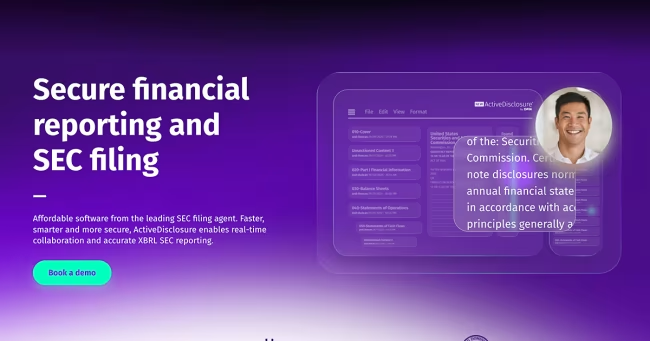
ActiveDisclosure® helps organizations prepare SEC filings, manage disclosure, collaborate across stakeholders, and submit EDGAR-ready documents. Arc Suite® streamlines governance and compliance workflows, while Venue® provides a secure virtual data room for due diligence and confidential document sharing during complex transactions.
Together, our solutions help organizations improve reporting accuracy, strengthen compliance, and streamline cross-border filing processes.
Practical Filing Checklist
Before submitting SEC Form F-7, confirm that your team has:
- Verified eligibility under the MJDS.
- Confirmed the offering qualifies for Form F-7.
- Reviewed Canadian disclosure documents for consistency.
- Updated material risk factors and offering information.
- Completed legal and executive approvals.
- Validated EDGAR formatting before submission.
Frequently Asked Questions
What is SEC Form F-4?
Form F-4 is used by eligible foreign private issuers registering securities issued in connection with mergers, acquisitions, exchange offers, and similar business combination transactions. It serves a different purpose than Form F-7, which is limited to certain Canadian rights offerings.
What is Section 7 of the Securities Act?
Section 7 of the Securities Act of 1933 establishes the information generally required in a registration statement filed with the SEC. The specific disclosure requirements vary depending on the registration form and the nature of the offering.
What is Form F-1?
Form F-1 is the general Securities Act registration statement for foreign private issuers that are not eligible to use specialized forms such as Form F-7. It is commonly used for initial public offerings and other registered securities offerings.
With decades of experience supporting SEC reporting and regulatory compliance, DFIN helps organizations simplify complex filing requirements through integrated disclosure management, EDGAR filing solutions, and secure collaboration tools. Whether preparing a single registration statement or managing ongoing reporting obligations, we provide the technology and expertise to help teams file with confidence.