In the accounting and finance ecosystem, many platforms take a one-size-fits-all approach, bundling capabilities into expansive suites that often come with added complexity and cost. But for most organizations, not every feature is necessary at every stage. That’s why here at DFIN, we have taken a modular approach to reporting. Our approach focuses on flexibility and optionality, enabling teams to build the reporting ecosystem they need and layer in the right capabilities at the right time. The result is a more flexible, cost-efficient model that aligns with how modern teams work: scalable, adaptable, and designed - only pay for what delivers real value.
How Does This Approach Work?
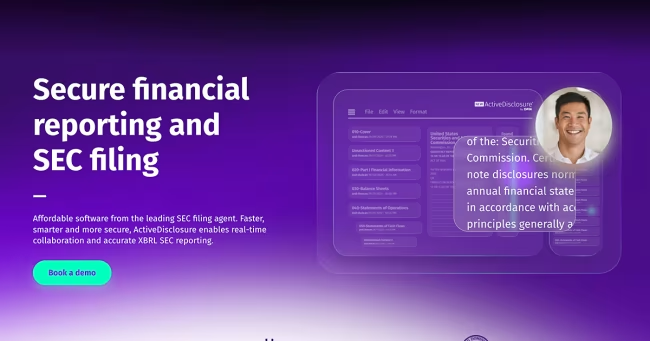
All of these capabilities are brought together through DFIN ActiveDisclosureSM - a centralized platform that powers a centralized platform that powers an entire reporting lifecycle. Designed to support a modular, stackable approach, ActiveDisclosure enables teams to prepare, review, manage, and file regulated reports within a single, unified environment. Spanning financial, operational, and compliance reporting, ActiveDisclosure gives organizations the flexibility to adopt new capabilities as needed while staying ahead of evolving regulatory requirements across jurisdictions, compressed timelines, and increasing disclosure demands.
Why Modern Reporting Teams Need a Centralized Platform
Despite the advance of technology, many financial reporting teams still rely on disconnected spreadsheets, email chains, and manually updated documents in their work. This introduces risks when teams need to respond quickly to new disclosure requirements or regulator-driven changes. These can leave little time for implementation, especially when the filings call for structured data, tagging, formatting, internal approvals, and multiple stakeholder reviews.
This can lead to late or inaccurate filings that can lead to:
- SEC comments
- Restatements
Missed deadlines
- Penalties
- Investor confidence issues
Having a centralized, auditable, and connected reporting platform, however, supports:
- Data consistency
- Version control
- Audit trails
- Role-based collaboration
- Faster document roll-forward
- More controlled filing preparation
Here are 10 reporting modules that demonstrate how ActiveDisclosure can meet needs across private, public, Alternative Investments, legal, ESG, FP&A, Capital Planning, and industry-specific reporting.
Private Company Reporting
Private companies can use ActiveDisclosure to prepare board materials, lender reports, investor updates, audit documentation, and transaction-ready financial packages. As they grow, these companies often face increasing stakeholder expectations. Inaccurate internal reports or delayed stakeholder materials can weaken trust, slow diligence, and create unnecessary friction during capital events.
Private companies need scalable workflows that can adapt quickly when audit requirements, lender covenants, or transaction timelines change. This means a strong reporting infrastructure can help teams cut down on manual work, improve accuracy, and prepare for future events including M&A or IPO readiness and fundraising.
Alternatives: Fund Reporting, Business Development Company Reporting, and REIT Reportings
Asset Managers and Fund Administrators Partner with ActiveDisclosure to help manage large numbers of Private funds, BDC’s, REIT’s, and CLO’s within our Alternative Investment Modules. Multi-Entity financial statements, investor decks, Fund Fact Sheets, capital account reporting, performance materials, regulatory documentation, and XBRL Teams in this context often need to collaborate between fund administrators, legal counsel, auditors, compliance teams, and investor relations. When regulatory updates happen, they can create compressed timelines. This is especially true when private fund rules, disclosure expectations, investor transparency, and regulatory requirements change with little warning.
Having a centralized platform allows organizations to create sustainable, repeatable reporting processes, rolls forward prior-period content, preserves version control, and maintains audit-ready documentation. This helps prevent late or inaccurate reporting that can create investor dissatisfaction, audit issues, regulatory exposure, and reputational damage.
FP&A Reporting
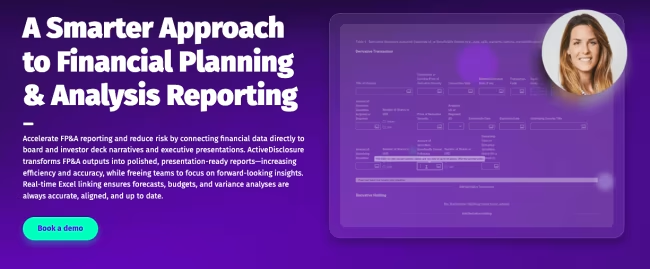
Teams preparing FP&A reporting rely on software modules to create board decks, management reports, forecasts, budgets, variance analyses, and executive presentations. These teams often must scramble when forecasts change; monthly results close, or leaders request revised scenarios. Manually updating spreadsheets in response increases the risk of outdated numbers, inconsistent commentary, and presentation errors.
These risks can lead to poor decisions, misaligned leadership messaging, and reduced confidence in finance outputs. ActiveDisclosure’s workflows link financial data directly to reports and presentations, giving teams the chance to update the numbers once and see changes reflected in all materials.
Legal Reporting
For legal teams, financial reporting automation software like ActiveDisclosure can be helpful when preparing SEC filings, registration statements, proxy materials, governance disclosures, transaction documents, and compliance reporting. Legal reporting can be complicated because it usually requires coordination across attorneys, finance teams, executives, auditors, outside counsel, and filing agents. Any changes to regulations can result in urgent updates needed for disclosure language, filing formats, review processes, or required exhibits.
Without a centralized and stackable platform with controlled workflows, legal reporting errors lead to inaccurate disclosures, delayed filings, SEC comments, amendments, or increased liability. The controlled workflows in ActiveDisclosure help legal teams manage approvals, comments, redlines, version history, and final filing packages, all while working from the same approved content and data.
Corporate Responsibility Reporting
Using ActiveDisclosure for Corporate Responsibility Reporting supports last-mile organization, management, and disclosure of data pertaining to sustainability, climate, workforce, governance and social impact. As regulators, investors, and global frameworks increase their expectations for consistent data, Corporate Responsibility reporting has evolved to meet them.
Having a centralized platform keeps ESG data consistent, standardizes disclosures, maintains documentation, and aligns narratives with annual reports and other materials. It helps companies avoid concerns over “greenwashing,” prevent additional investor scrutiny, reduce regulatory risk, and escape reputational damage. With ActiveDisclosure, Corporate Responsibility reporting improves auditability, data governance, and cross-functional collaboration.
Broker-Dealer Reporting
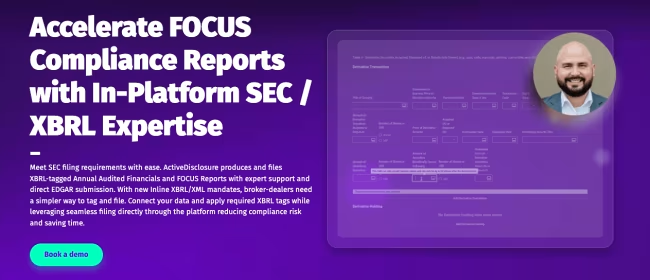
Broker-dealers depend on reporting software to prepare, tag, validate, and file their required financial reports including Annual Audited Financial Statements and FOCUS Reports. Late reports or inaccuracies can create regulatory exposure, compliance deficiencies, or potential penalties.
This is tricky because this type of reporting is highly technical, with teams required to manage structured data requirements, regulatory formatting, and direct filing obligations. ActiveDisclosure supports Inline XBRL/XML tagging, validation, EDGAR submission, review workflows and expert-supported filing preparation. This helps broker-dealer CFOs and compliance officers gain accuracy, audit trails, and controlled workflows to help them keep up with frequent regulatory requirements such as changes to structured data mandates.
Global Statutory Reporting
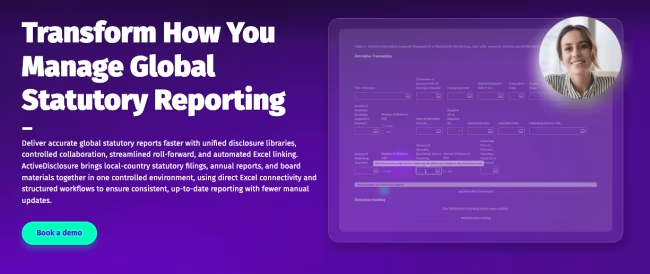
In global statutory reporting and multi-entity reporting, companies must prepare financial statements, local filings, annual reports, and board materials across multiple jurisdictions. This means they must juggle different local requirements, accounting standards, formats, deadlines, and approval processes. With so many jurisdictions in play, the frequency of regulatory updates becomes much greater.
But with a modular platform like ActiveDisclosure, reporting teams can standardize reporting libraries, link approved data, manage jurisdiction-specific templates, and support collaboration between corporate, local, and audit teams. This reduces the risk of missing local deadlines, providing inaccurate statutory reports that can lead to penalties, audit issues, and local compliance exposure, while providing centralized control with local flexibility.
Insurance Statutory Reporting
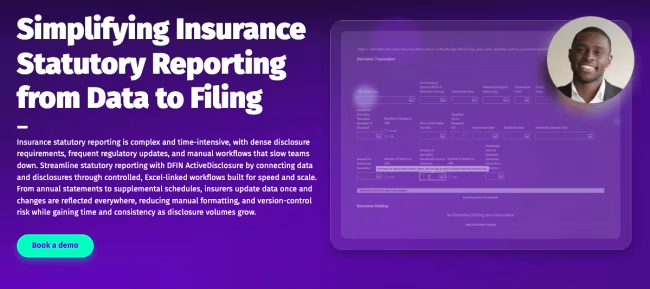
Insurance companies frequently use software like ActiveDisclosure to manage annual statements, quarterly statements, supplemental schedules and statutory disclosures. Updates to regulations can result in changes to reporting schedules, filing requirements, tagging expectations, or implementation timing that creates added pressure for reporting teams.
When used for insurance statutory reporting, ActiveDisclosure can link Excel data, roll forward prior-year templates, manage review comments, track changes, and reduce repetitive manual edits across schedules. With audit trails, version control, and review accountability, it helps insurers prevent inaccuracies and late statutory filings.
BDC Reporting
Business Development Companies are one of many Alternative Investments that need/require reporting software to help them prepare SEC filings, shareholder reports, financial statements, portfolio disclosures, and investor communications. BDCs operate in a specialized reporting environment combining investment company-style reporting with public-company disclosure expectations. This means changes to regulations or disclosure requirements can require fast updates to financial statements, portfolio company disclosures, risk factors, or shareholder materials.
Because BDCs need accurate portfolio-level information, valuation support, and controlled disclosure workflows, a centralized software platform can be very helpful. It can maintain consistency across filings, automate data updates, support XBRL tagging, and coordinate reviews. This helps them avoid SEC scrutiny, investor concerns, compliance issues, and reputation risks.
Ownership and Beneficial Ownership Reporting
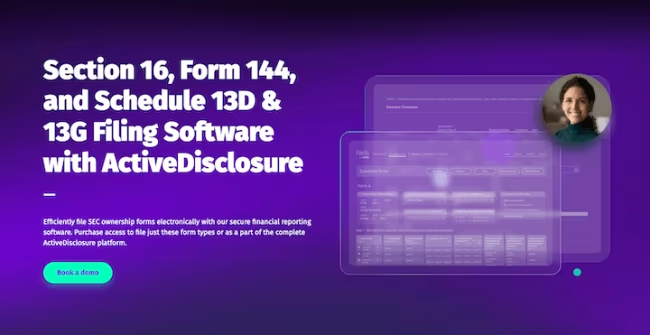
Ownership and beneficial ownership reporting includes filings such as Section 16 Forms 3, 4 and 5, Form 144, and Schedules 13D and 13G. These come with short deadlines, complex ownership calculations, insider activity, changing thresholds, and coordination between multiple teams.
Any missed deadlines or inaccuracies can result in enhanced scrutiny, penalties, amended filings, and reputational damage. This is why having software that delivers precision, timeliness, and documentation can be so important. The right platform can automate data collection, manage filing calendars, support review workflows, reduce manual entry and maintain a clear audit trail.
File and Report with Confidence Through ActiveDisclosure
Modern financial reporting and SEC filing software are no longer limited to the traditional periodic SEC filings. These modules found in ActiveDisclosure support a wide range of use cases including FP&A reporting and private company reporting as well as broker-dealer, insurance, ESG, and ownership disclosures. With regulatory updates becoming more frequent and implementation timelines getting tighter, organizations need reporting workflows that are accurate, controlled, scalable, and supported by experts.
DFIN ActiveDisclosure helps reporting teams across all types of financial reporting streamline their reporting, improve consistency, reduce manual risks, and stay prepared for evolving compliance demands.